Margin and markup are critical concepts that define the difference between the cost price and the selling price of your supplies. These metrics help businesses ensure profitability, set competitive prices, and track financial performance effectively. In Ascora, margin and markup calculations are straightforward and provide actionable insights into your cost and revenue structure.
Both margin and markup are expressed as percentages, yet they serve distinct purposes:
- Margin represents the percentage of income that is gross profit. It reflects how much of your revenue is retained after covering costs.
- Markup indicates how much you increase the cost price to determine the selling price. It shows the relationship between your cost and the price you charge your customers.
Although margin and markup are based on the same financial figures (cost, profit, and sell price), markup is always higher than margin because they calculate percentages differently.
Key Concepts with Examples
- Sell Price (Retail Price): The price at which you sell your product or service.
- Cost: The price you pay to purchase or produce the item.
- Profit: The difference between the sell price and the cost price.
Refer to the formulas and visual aids below to better understand the difference.
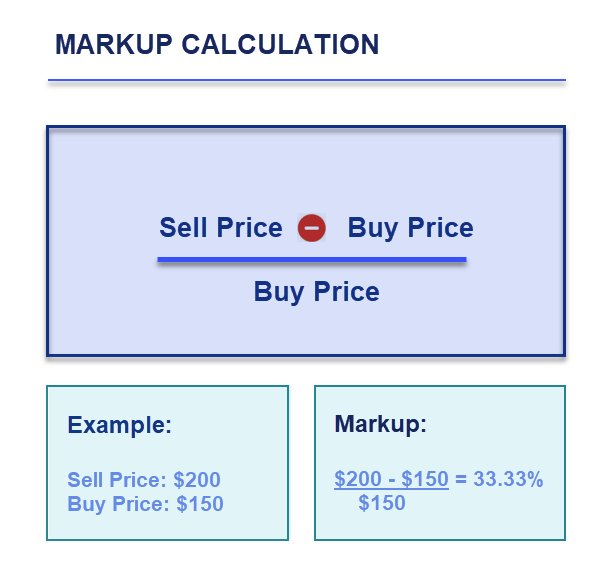
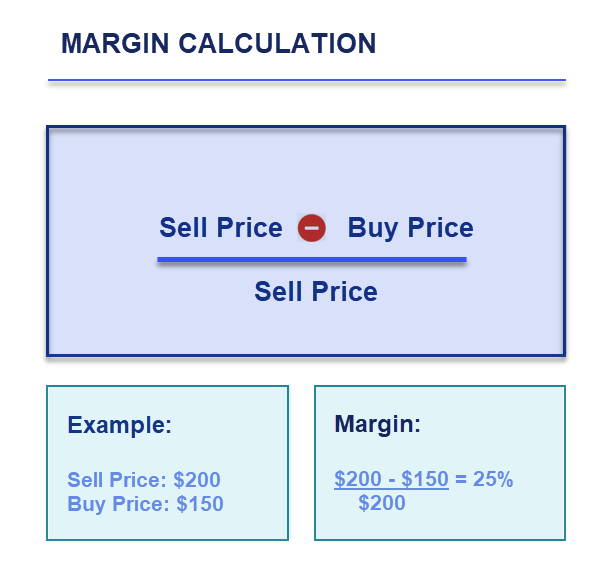
Consider a supply item with:
- Cost Price: $150
- Sell Price: $200
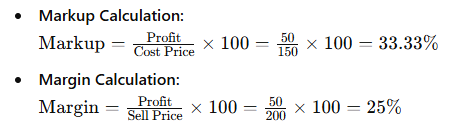
This example highlights that markup reflects the price increase based on cost, whereas margin focuses on the percentage of revenue that is profit.
Job Supply
Using the same example of an item with a buy price of $150 and a sell price of $200, refer to the following image which shows how it looks like in the Ascora supply details screen.
a. Cost - is your buy price
b. Markup - this is your markup that you can adjust manually
c. Charge Ex Tax - is your sell price
Note: If you adjust your item cost price or Charge Ex Tax (sell price), markup is automatically recalculated.

Job Profitability
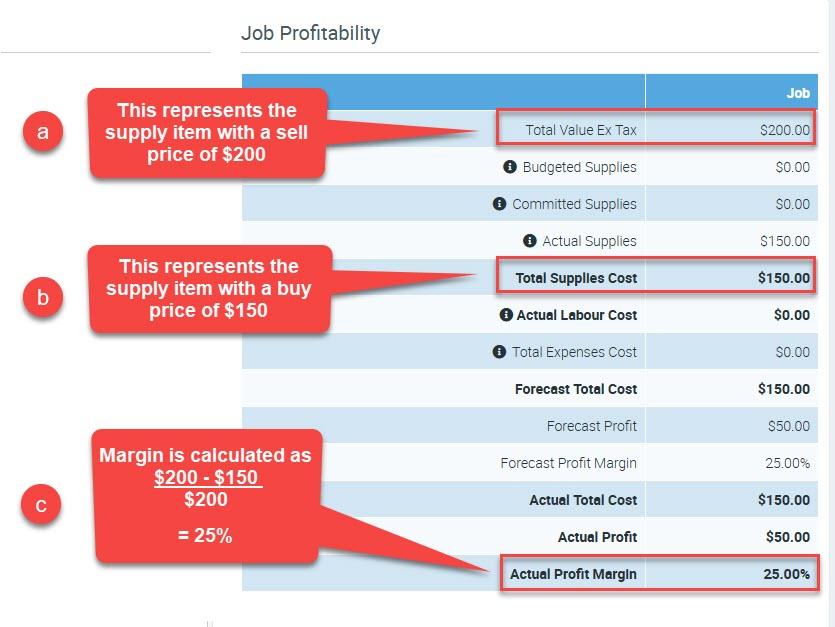
Using the same example, our Job Profitability will show exactly the same calculation as shown in the image below.
a. Total Value Ex Tax represents the supply item that we sell at $200. If you have multiple supplies and use Time & Materials pricing method, this will always be the total of all combined supply sell prices.
b. Total Supplies Cost represents the supply item that we buy at $150. If you have multiple supplies and use Time & Materials pricing method, this will always be the total of all combined supply buy prices.
c. Actual Profit Margin is calculated as sell price minus buy price divided by sell price = $25%.
Got a question?
Submit an Idea 💡 Go to Ideas Portal